Pinealon Peptide is not just another science word; it’s a tiny molecule with big implications.
And here’s why dozens of researchers are turning their labs toward it. Most people think peptides are all the same.
They’re not. Not this one.
This tripeptide called EDR has roots in decades of Russian bioregulator research that touches on gene expression, oxidative stress, and neural cell resilience.
We’ll break down how Pinealon works, what real experimental evidence says, and why understanding its benefits might change the way you see peptides, even if you’d never heard of it before.
Part 1. What Is Pinealon Peptide?
Pinealon Peptide is a short synthetic biological peptide composed of three amino acids:
- Glutamic acid (Glu)
- Aspartic acid (Asp)
- Arginine (Arg)
This specific amino acid sequence is commonly referred to in scientific literature by its code EDR. Short peptides, such as Pinealon, are not typically studied as drugs in the traditional pharmaceutical sense. Instead, they are classified as bioregulators, molecules that can subtly influence cellular processes at the molecular level (Khavinson et al. 2011).
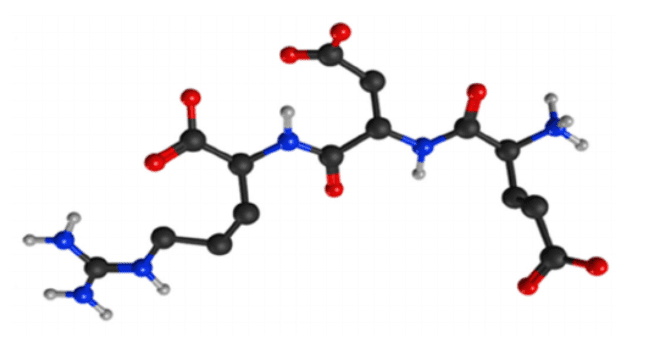
Spatial molecular structure of Pinealon EDR tripeptide (Glu-Asp-Arg)
Unlike typical proteins or hormones that exert their effects through classic receptor binding on the cell surface, short peptides such as Pinealon have been investigated for their ability to:
- Interact directly with intracellular components
- Influence cell nuclei
- Associate with DNA and gene-regulatory regions
Origin and Discovery of Pinealon Peptide
Scientific interest in Pinealon originates from decades of peptide bioregulator research. Primarily, research was conducted by Russian scientists studying the biological mechanisms of aging and cellular regulation. Pinealon belongs to a broader class of short peptides investigated for their potential involvement in:
- Gene expression regulation
- Cellular metabolism
- Maintenance of cellular health during aging
These characteristics place Pinealon within the wider field of peptide-based regulatory biology (Khavinson et al. 2013).
In one foundational experimental study, researchers demonstrated that Pinealon could:
- Modulate oxidative stress responses
- Support cell viability in laboratory models
The findings suggested that Pinealon may help protect cells under oxidative challenge by reducing the accumulation of reactive oxygen species (ROS) and supporting cellular survival pathways (Khavinson et al. 2011).
Part 2. How Pinealon Peptide Works in the Body?
Pinealon’s biological activity has been examined primarily at the cellular and molecular levels. These studies focus on how short peptides participate in intracellular regulatory processes.
Pinealon Peptide and Gene Expression
One of the most extensively studied aspects of Pinealon Peptide is its potential influence on gene expression. Short peptides may interact with DNA or chromatin-associated structures, thereby participating in the regulation of gene activity without altering the underlying DNA sequence.
Scientific studies indicate that Pinealon may:
- Bind to specific DNA regions or nuclear components
- Influence the transcriptional activity of genes involved in cellular maintenance
- Support the regulation of genes associated with cell survival and stress resistance
In experimental models, such regulatory activity has been associated with improved cellular stability under stress conditions (Khavinson et al. 2011).
Pinealon’s Role in Neural Cell Function
Research suggests that Pinealon may support neural cell homeostasis by influencing intracellular signaling pathways and gene expression relevant to neuronal health.
Experimental findings have associated Pinealon with:
- Support of neuronal metabolic activity
- Modulation of cellular responses to oxidative stress
- Maintenance of functional stability in aging neural cells
Rather than acting as a neurotransmitter or stimulant, Pinealon is studied as a regulatory peptide that may help preserve normal cellular processes within neural tissue. This distinction is important, as it positions Pinealon within research focused on long-term neural resilience rather than short-term neurological stimulation (Khavinson et al. 2013).
Part 3. Pinealon Peptide Benefits
The benefits discussed below are derived from experimental, cellular, and animal studies. Let’s have a look at these one by one.
a) Cognitive Function and Memory Support
Research conducted on neural models indicates that the EDR peptide can influence gene expression related to synaptic structure and neuronal connectivity.
In studies examining neurodegenerative conditions, Pinealon was shown to be associated with:
- Preservation of dendritic spine density
- Support of neuronal connectivity
- Modulation of genes involved in synaptic plasticity
These mechanisms are considered biologically relevant to learning and memory processes, as dendritic spines play a critical role in signal transmission between neurons. These findings do not demonstrate direct cognitive enhancement in humans. (Khavinson et al. 2011)
b) Neuroprotective Effects of Pinealon
Multiple laboratory studies have examined Pinealon’s effects on neural cells exposed to damaging conditions, particularly oxidative stress.
Experimental findings suggest that Pinealon may:
- Reduce neuronal cell death
- Improve cell survival rates under stress conditions
- Support the structural stability of neural cells
These neuroprotective effects have been observed in both cellular and animal models. In those, Pinealon exposure was associated with improved resistance to damaging stimuli that commonly affect nervous tissue. (Arutjunyan et al. 2012)
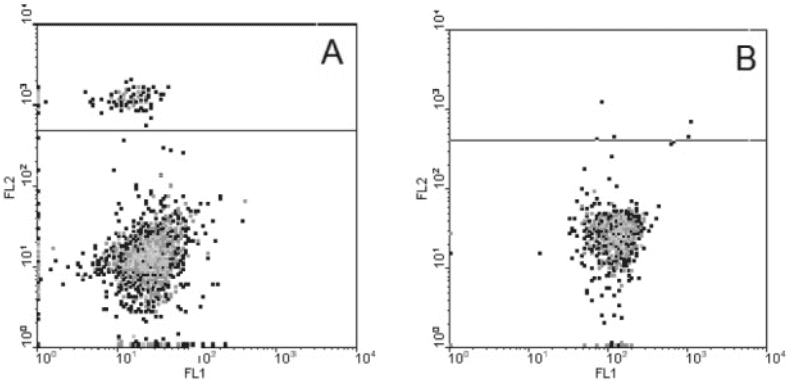
Flow cytometry comparing untreated neurons (A) and Pinealon-treated neurons (B), showing improved viability.
c) Oxidative Stress Modulation
Oxidative stress is a major factor contributing to cellular aging and neurodegeneration. Research examining Pinealon has shown that it may influence cellular responses to oxidative damage by regulating intracellular redox balance.
In experimental models, Pinealon has been shown to:
- Suppress the accumulation of reactive oxygen species (ROS)
- Reduce markers of oxidative cellular damage
- Support antioxidant defense mechanisms
By limiting excessive oxidative stress, Pinealon helps in maintaining cellular integrity under experimentally induced stress conditions. These findings are particularly relevant in neural tissue, which is highly sensitive to oxidative damage. (Ilina et al. 2022)
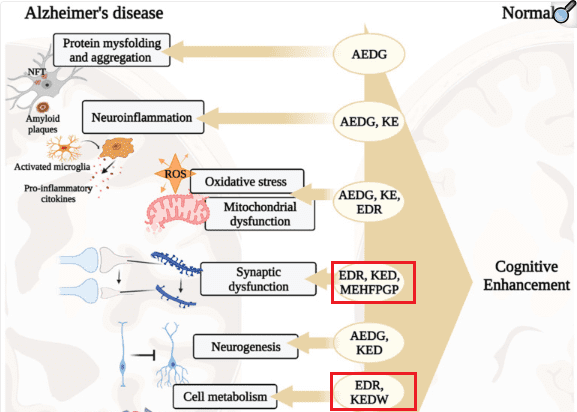
Pinealon EDR peptide reduces oxidative stress pathways.
d) Age-Related Neuronal Decline
Aging is associated with progressive changes in neuronal metabolism, gene regulation, and stress tolerance. Pinealon peptide helps by supporting neural cells during age-related stress by influencing regulatory pathways involved in cellular maintenance.
Experimental observations indicate that Pinealon may:
- Support neuronal metabolic activity
- Improve stress tolerance in aging neural cells
- Contribute to maintaining functional stability at the cellular level
These findings position Pinealon in such peptides that may help preserve cellular function during biological aging, particularly in the nervous system. (Khavinson et al. 2020)
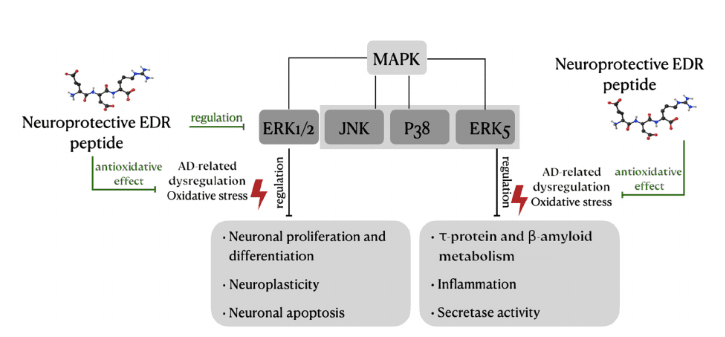
Pinealon EDR peptide regulates oxidative stress and neuronal aging pathways.
Part 4. Scientific Studies and Clinical Research on Pinealon
Research on Pinealon Peptide has been conducted mainly in preclinical settings. Most studies focus on understanding its biological role at the cellular and molecular levels. These investigations aim to explain regulatory mechanisms rather than clinical outcomes.
Types of Research Conducted on Pinealon Peptide
Current scientific literature on Pinealon consists primarily of:
- In vitro studies, using cultured cells
- Animal studies, mainly rodent models
- Mechanistic and review-based research, focused on peptide regulation
These study types are typical for early-stage peptide research.
Scope and Focus of Existing Studies
Most Pinealon studies examine:
- Cellular viability under stress
- Oxidative stress markers
- Gene expression regulation
The goal is to understand how Pinealon interacts with biological systems. These studies do not aim to establish therapeutic use.
Human Data and Clinical Research Status
At present, Pinealon has not been tested in large, controlled human clinical trials. Available human-related discussions appear only within theoretical or review-based literature.
As a result:
- No approved medical use exists
- No clinical dosage has been established
- No conclusions on human efficacy can be drawn
All findings remain preclinical. (Ilina et al. 2022)
Pinealon in Neurodegenerative Research Context
Pinealon appears in research related to neurodegeneration and aging as part of the broader group of short regulatory peptides. Studies explore how such peptides may influence cellular responses linked to neuronal stress and aging processes.
These investigations contribute to basic neuroscience research. They do not present Pinealon as a treatment for neurodegenerative diseases.
Research Limitations and Interpretation
Several limitations should be noted:
- Most data come from cell and animal models
- Long-term human effects are unknown
- Clinical relevance has not been established
Therefore, Pinealon’s research should be interpreted as exploratory.
Part 5. Pinealon vs Other Neuroactive Peptides
Comparing Pinealon with other neuroactive peptides helps clarify its research focus, biological role, and limitations. The comparison below is based on mechanism, peptide structure, and research context, not clinical efficacy.
Pinealon vs Epitalon
Pinealon and Epitalon are both short peptides studied within the field of peptide bioregulators. However, their research focus differs.
Key differences include:
- Pinealon
- Tripeptide (EDR)
- Studied mainly in neural cells
- Focuses on gene regulation, oxidative stress, and neuronal stability
- Epitalon
- Tetrapeptide
- Studied primarily in aging and pineal gland regulation
- Investigated for effects on telomerase activity and circadian-related processes
In research literature, Pinealon is more closely associated with brain-specific cellular mechanisms, while Epitalon is studied in a broader systemic aging context. Both remain within preclinical research frameworks.
Pinealon vs Cortexin
Cortexin differs significantly from Pinealon in both structure and research application.
Key distinctions:
- Pinealon
- Chemically defined tripeptide
- Synthetic and sequence-specific
- Studied at the molecular and gene-regulatory level
- Cortexin
- Complex mixture of polypeptides
- Derived from animal tissue
- Studied mainly for neurotrophic and metabolic effects
Because Cortexin contains multiple peptide fractions, its mechanisms are broader and less sequence-specific. Pinealon research, by contrast, focuses on precise molecular interactions due to its defined amino acid structure.
Part 6. How to Buy Pinealon Peptide Safely?
When sourcing Pinealon Peptide for research purposes, product quality and supplier reliability are critical. Because Pinealon is studied at the cellular and molecular level, even small variations in purity or handling can affect experimental consistency and outcomes. For this reason, researchers should approach peptide sourcing with the same rigor applied to laboratory protocols.
Why Many Researchers Choose NuScience Peptides
Within the research community, NuScience Peptides is frequently selected due to its emphasis on quality control and transparency. Key characteristics highlighted on the NuScience Peptides platform include:
- Independent third-party testing for purity and identity
- Certificates of Analysis (COAs) available for verification
- High-purity research peptides, produced to laboratory standards
- Clear research-use-only designation, supporting compliant use
- Professional handling and packaging, designed to maintain peptide stability
These features align closely with what researchers look for when sourcing peptides intended for experimental and educational applications.
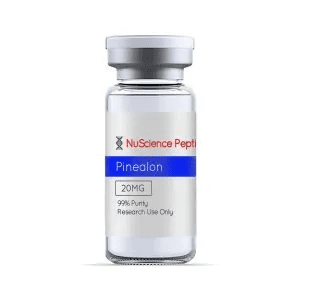
Pinealon Peptide from NuScience Peptides
Final Thoughts
Pinealon Peptide is a short synthetic bioregulator studied mainly in cellular and animal research. Scientific studies describe Pinealon (EDR) for its role in gene expression, oxidative stress modulation, and neural cell stability, not as a clinical drug. Pinealon Peptide benefits focus on cognitive mechanisms, neuroprotective effects, age-related neuronal decline, and intracellular regulation, all within a preclinical research context.
Current scientific evidence shows that Pinealon is used for research and educational purposes only, with no large-scale human clinical trials available. Selecting a reliable supplier like NuScience Peptides supports consistency, transparency, and quality in peptide research.
Disclaimer
This article is for educational and research purposes only. Pinealon Peptide is discussed based on preclinical studies, including cellular and animal research. It is not approved for medical use, and no clinical claims are made. This content does not replace professional medical advice, diagnosis, or treatment.
References
Arutjunyan, A., Kozina, L., Stvolinskiy, S., Bulygina, Y., Mashkina, A., & Khavinson, V. (2012). Pinealon protects the rat offspring from prenatal hyperhomocysteinemia. International Journal of Clinical and Experimental Medicine, 5(2), 179–185 (Google Scholar)
Ilina, A., Khavinson, V., Linkova, N., & Petukhov, M. (2022). Neuroepigenetic mechanisms of action of ultrashort peptides in alzheimer’s disease. International Journal of Molecular Sciences, 23(8), 4259. https://doi.org/10.3390/ijms23084259
Khavinson, V. (2011, October 20). Pinealon increases cell viability by suppression of free radical levels and activating proliferative processes. Rejuvenation Research. https://www.liebertpub.com/doi/abs/10.1089/rej.2011.1172
Khavinson, V. Kh., Kuznik, B. I., & Ryzhak, G. A. (2013). Peptide bioregulators: A new class of geroprotectors. Message 1: Results of experimental studies. Advances in Gerontology, 3(3), 225–235. https://doi.org/10.1134/S2079057013030065
Khavinson, V., Linkova, N., Kozhevnikova, E. O., & Trofimova, S. (2020, December 31). EDR Peptide: Possible Mechanism of Gene Expression and Protein Synthesis Regulation Involved in the… MDPI. https://www.researchgate.net/publication/348139472_EDR_Peptide_Possible_Mechanism_of_Gene_Expression_and_Protein_Synthesis_Regulation_Involved_in_the_Pathogenesis_of_Alzheimer%27s_Disease