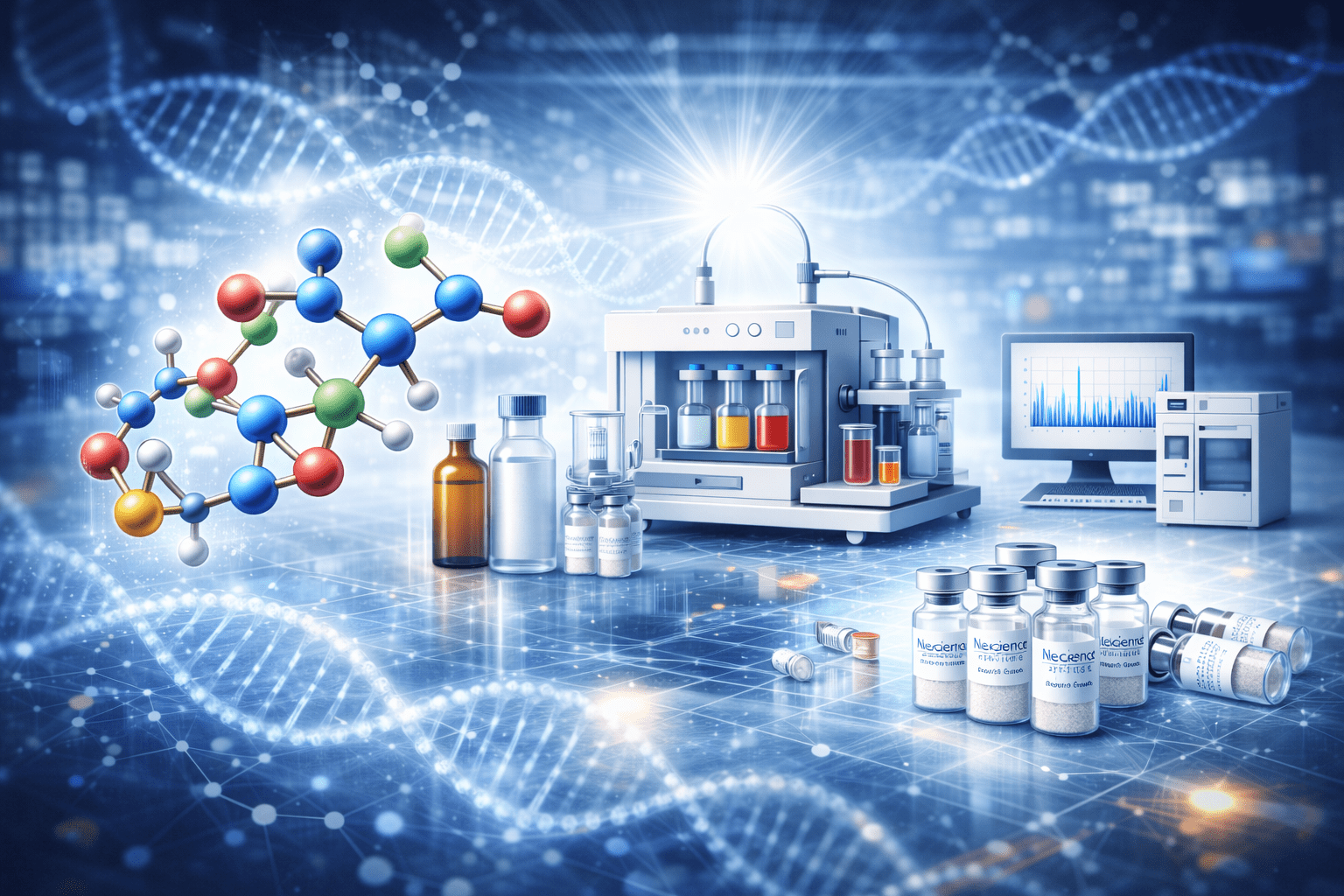

Peptide synthesis drives today’s research boom in just a few key processes: controlled chemical assembly, strict quality checks, and precise sequence control.
Most people hear “peptide” and think of treatments or trendy wellness talk, but the hidden engine of this entire field is the chemistry that actually builds these molecules.
That’s why labs around the world are now investing in better synthesis methods.
This isn’t minor lab housekeeping, but it’s a foundational shift that supports expansion in drug research, metabolic studies, and antimicrobial programs.
Understanding how synthesis works reveals why the market behind it is now valued in the billions.
Part 1. The Silent Backbone of the Peptide Industry
Everyone talks about peptides, but very few talk about how they actually come to life.
Peptide synthesis is the chemical process used to build peptides by linking individual amino acids together in a specific sequence under controlled laboratory conditions.
Before a peptide can be studied, tested, or improved, it must first be created in the lab. This makes peptide synthesis the foundation of the entire peptide industry.
The factors below explain why peptide synthesis has become one of the most valuable parts of the peptide market.
- Every peptide starts with synthesis
Whether it is an AI-designed sequence, a metabolic research peptide, or an antimicrobial candidate, synthesis always comes first.
- AI and research depend on real molecules, not ideas
AI can suggest better peptide sequences, but those sequences are meaningless until they are physically produced and tested.
- Therapeutic research cannot scale without synthesis
Fields like metabolic research, oncology, and regenerative science require precise, repeatable peptide production.
- Quality and consistency matter more than ever
As research standards rise, labs need peptides that are pure, reliable, and reproducible.
At PeptideMania, we focus not just on peptides, but on the systems that make peptide research possible.
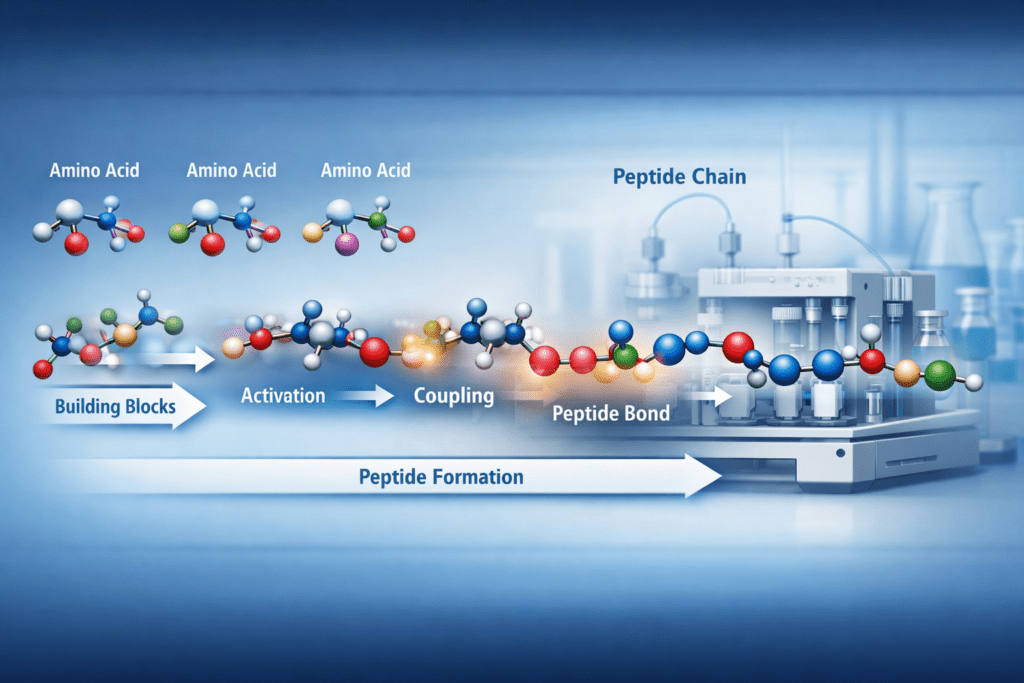
Peptide Synthesis from Amino Acids
Part 2. What Peptide Synthesis Actually Involves (Beyond the Basics)
Peptide synthesis may sound technical, but the core idea is straightforward. It is a controlled laboratory process where peptides are assembled step by step, following a predefined sequence.
In modern research settings, this process is most commonly carried out using solid-phase peptide synthesis (SPPS). This method allows scientists to build peptides efficiently while maintaining control over sequence accuracy and purity.

Solid-Phase Peptide Synthesis (SPPS)
What makes peptide synthesis more complex than it appears is the level of precision involved. Each amino acid must be added in the correct order, under strict conditions, to avoid errors that can affect research outcomes.
Here are the key elements that define how peptide synthesis works in practice:
- Peptides are assembled one unit at a time
Amino acids are chemically added in a sequence-specific manner to ensure the final peptide matches the intended design.
- Laboratory conditions must be tightly controlled
Temperature, reagents, and reaction steps all influence the final quality of the peptide.
- Purification is a critical part of the process
After assembly, peptides must be cleaned and analyzed to remove unwanted byproducts.
- Scaling synthesis adds cost and complexity
Producing larger quantities or specialized sequences requires more resources, time, and quality checks.
Because of these factors, peptide synthesis is not just a routine lab step. It is a specialized process that directly affects the reliability and usefulness of peptide research.
Part 3. The Real Reasons the Peptide Synthesis Market Is Worth Billions
The rapid growth of the peptide synthesis market is not driven by one single trend. It is the result of multiple scientific and technological shifts happening at the same time.
Below are the main forces pushing this market forward.
AI Is Creating More Peptide Candidates Than Labs Can Handle
Artificial intelligence has transformed how peptide sequences are discovered and optimized. AI systems can now analyze large datasets and propose thousands of new peptide designs in a short time.
However, discovery and production are not the same thing. While AI can suggest promising sequences, each of those sequences still needs to be physically synthesized before it can be tested. This gap between digital discovery and real-world validation has sharply increased the demand for peptide synthesis.
As AI tools continue to improve, the number of candidate peptides entering research pipelines is growing faster than ever. This directly translates into higher synthesis needs across academic, biotech, and pharmaceutical labs.
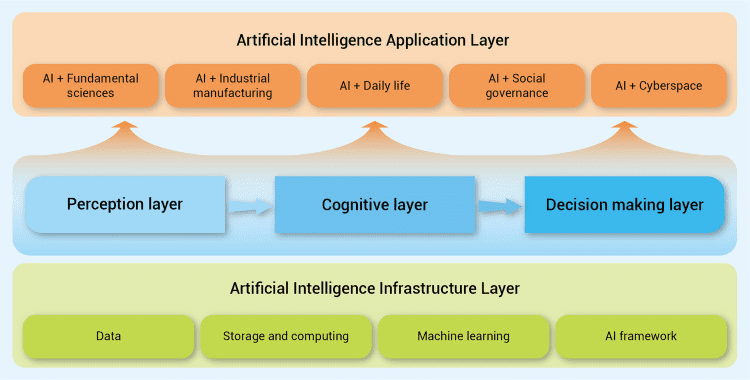
General Framework of AI
Peptide Therapeutics Are Expanding Across Multiple Fields
Peptides are no longer limited to a narrow set of applications. Research into peptide-based therapeutics has expanded into several major scientific fields at once.
Peptides are actively studied in:
- metabolic and hormone-related research
- targeted oncology approaches
- antimicrobial and infection-focused studies
- regeneration and tissue-repair research
Each of these areas requires peptides with specific sequences, properties, and purity levels. As more therapeutic programs explore peptide-based approaches, synthesis demand continues to rise alongside them.

Peptide research across medical fields
Custom Research Demand Is Replacing One-Size-Fits-All Peptides
Modern peptide research is highly specific. Researchers rarely need generic peptides; instead, they require sequences designed for precise experimental conditions.
This includes:
- sequence-specific peptides
- chemically modified peptides
- small-batch production for early-stage research
- high-purity peptides for reproducible results
Because of this shift, the peptide synthesis market is moving away from standardized products and toward customized research solutions. This change increases both the technical complexity and the overall value of synthesis services.
As a result, many research teams rely on specialized, research-grade peptide suppliers to meet these evolving needs.
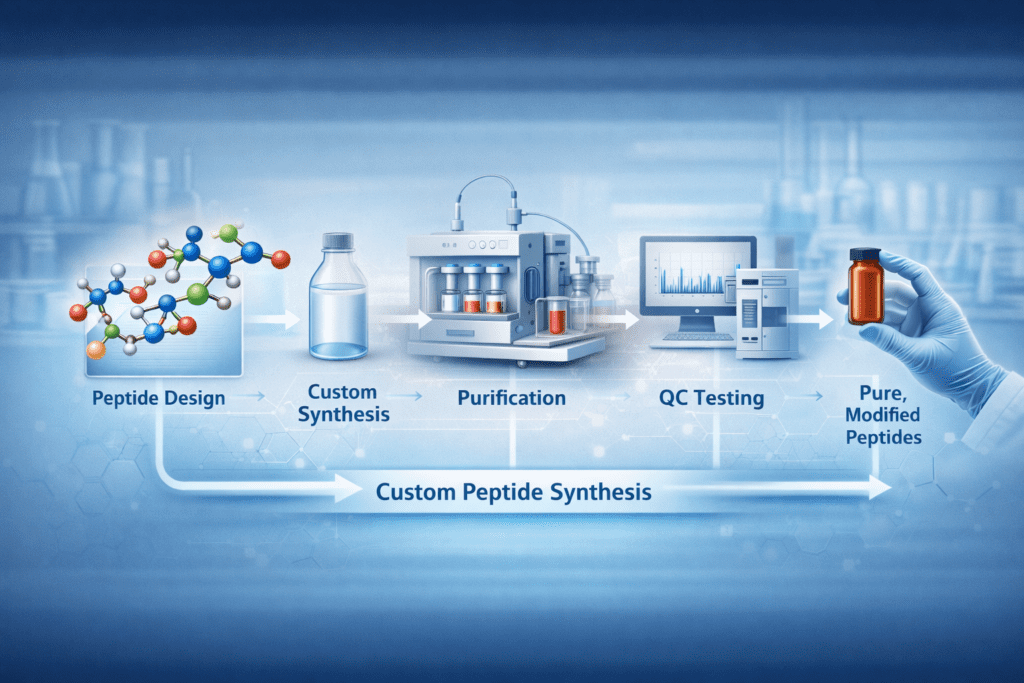
Custom peptide synthesis process flow
Part 4. How Peptide Synthesis Technology Is Rapidly Evolving
Peptide synthesis is not growing in value just because demand is rising. The technology behind synthesis itself is also advancing, making production more efficient, reliable, and scalable than before.
The following improvements are a major reason why the peptide synthesis market continues to expand rather than slow down.
Automation and High-Throughput Synthesis
Automation also helps standardize synthesis conditions, which is critical when researchers need reproducible results across different studies. As research pipelines grow larger, high-throughput synthesis has become a practical necessity rather than a luxury.
These systems allow:
- parallel synthesis of multiple peptides
- shorter production timelines
- reduced handling-related errors
Rising Standards for Purity, Testing, and Validation
Producing a peptide is only part of the process. Verifying its quality is just as important. Today’s research environment places strong emphasis on analytical validation before peptides are used in experiments.
Common expectations now include:
- chromatographic purity analysis
- molecular weight confirmation
- documented quality control reports
- consistent results across repeated batches
These requirements reflect a broader shift toward data reliability and experimental transparency. As a result, synthesis workflows are increasingly paired with advanced analytical testing to meet modern research standards.
As expectations continue to rise, many laboratories prefer suppliers that provide thoroughly tested, research-grade peptides to support dependable experimental work.
Part 5. What This Means for Researchers, Labs, and Suppliers
As peptide pipelines grow larger and more complex, access to dependable synthesis has become a practical concern for many research teams.
Faster Access Shapes Research Timelines
Research does not move at a fixed pace. Delays in material availability can slow down entire projects.
With more peptide candidates entering early-stage studies, researchers increasingly value synthesis workflows that can keep up with fast-moving experimental schedules.
Quicker access to well-characterized peptides allows teams to test ideas sooner, refine hypotheses faster, and avoid unnecessary downtime between study phases.
Reliability Is Now a Research Requirement
Consistency in peptide quality plays a major role in experimental confidence. Small variations in sequence accuracy or purity can influence data interpretation, especially in sensitive biological studies.
For this reason, labs place strong emphasis on synthesis methods and suppliers that deliver repeatable results. Reliable peptides reduce variability and help ensure that experimental outcomes reflect real biological effects rather than production differences.
Trust in Synthesis Supports Better Science
Researchers look for clear documentation, transparent testing practices, and dependable production standards when selecting peptide suppliers.
This growing focus on trust and clarity reflects a broader shift toward responsible research practices.
At PeptideMania, this is exactly the kind of industry evolution that focuses on explaining complex research developments in a clear and practical way, so readers can better understand how scientific progress is shaped behind the scenes.
Part 6. The Role of Research-Grade Suppliers in a Billion-Dollar Market
As peptide synthesis demand increases, the importance of reliable suppliers has grown alongside it. Research today moves faster, involves more complex designs, and requires tighter quality control than ever before.
The points below explain why suppliers now play a critical role in this expanding market:
- Research Workflows
Laboratories need consistent access to peptides that meet exact specifications to maintain steady research progress.
- Consistency
When peptide quality varies between batches, research data can become harder to interpret and validate.
- Research-grade standards
Modern studies expect clear analytical data, documented testing, and reproducible results from peptide suppliers.
- Supplier Reliability
As peptide programs scale, labs prefer sourcing partners that align with evolving scientific expectations.
As peptide synthesis demand grows across research fields, trusted suppliers like NuScience Peptides support modern lab work by providing lab-tested, research-grade peptides designed for scientific use.
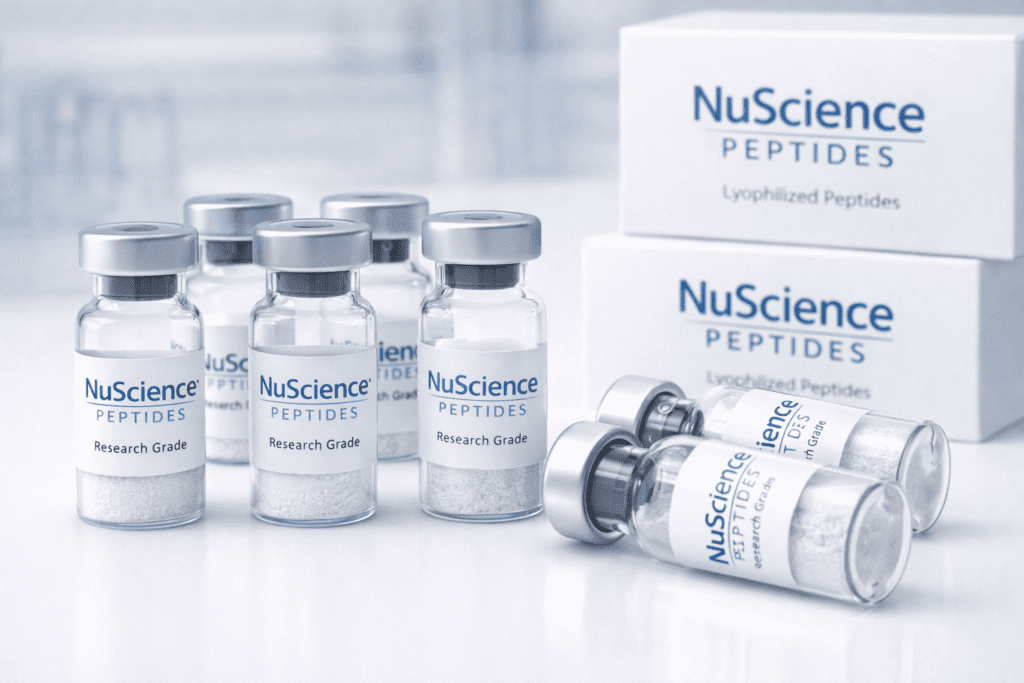
NuScience Peptides Research
Conclusion
Peptide synthesis sits at the center of today’s peptide economy. As discovery tools become faster and experimental demands grow more specific, the need to reliably produce high-quality peptides continues to rise. This is not a temporary surge, but a structural shift driven by science, technology, and research scale.
What makes this market valuable is not just volume, but precision. From advanced synthesis methods to strict validation standards and dependable sourcing, every step now matters more than ever.
As peptide research moves forward, the ability to deliver consistent, research-grade peptides can be achieved by reliable sources like NuScience Peptides.